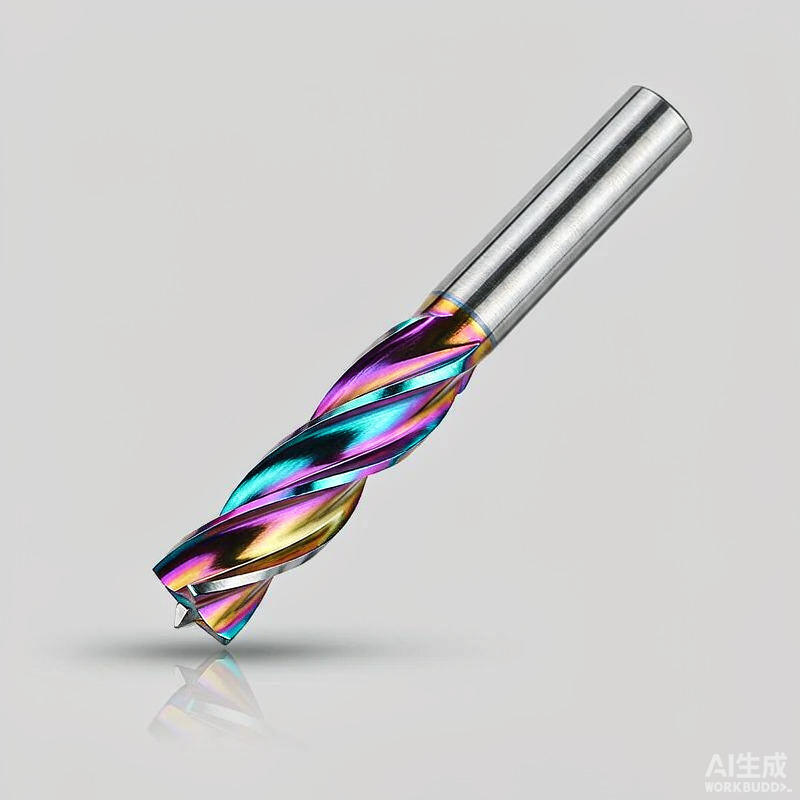
A polished case loses its colour in a way a machined case does not. Fingerprints, skin salt and abrasive dust in a pocket take the shine off a coated surface, and the part reads as worn even when the geometry is untouched. Watch and jewellery PVD coating replaces a loose electro-deposited colour layer with a hard, thin film bonded to the base metal, so the colour layer is also the wear layer. It solves the second problem as well: a watch case or a jewellery piece that discolours in storage or in contact with cleaning chemicals.
Decorative coating is only worth doing when the substrate is right and the surface properly prepared, because the film follows the base material. A bent, scratched or corroded part needs polishing or replacement first.
Typical parts we coat
- Watch cases, watch bands and watch parts; watch crystals
- Jewellery and accessories: high-end jewellery pieces, fashion accessories, metal craft items and metal sculptures
- Craft and decorative work: coloured and multi-colour films, collectible-grade craft pieces
- Bathroom and kitchen hardware: taps, shower heads, storage shelves, towel rails, door handles, hinges, cookware, knives, sinks and hobs
- Sports equipment: ski blade edges and surfboard surfaces
- Non-metal bodies needing colour and scratch resistance: PS plastic housings and glass parts
Coating options and why they fit
Gold titanium nitride (TiN)
Gold TiN is the reference decorative finish for watches and jewellery: a warm, stable gold colour that stays where a loose plating is already gone. The colour comes from the reaction between titanium and nitrogen, so the nitrogen-to-titanium ratio and bias conditions have to be held steady batch to batch, or two runs of the same part will not match. Where drop and impact resistance matters as much as colour, a gradient of TiN over CrN over a titanium bond layer is used.
Rose gold, silver and other metallic tones
Rose gold and other warm tones are produced by adjusting the deposit rather than the basic process, and the same thickness control applies. Bright silver and silver-grey finishes are usually produced with a metal film, with nickel nitride (NiN) as an option where a neutral, slightly warmer silver is wanted on a part that sees handling.
Black and coloured DLC
Black on a decorative part is produced by a carbon-based film, and the darker the deposit the lower the light it returns, which is why it hides fingerprints and fine scratching better than a bright polished black. DLC is the harder, lower-friction option against a metal nitride, with one diamond-like carbon film reported at 7500 HV and an sp3 carbon content above 80 %. The trade-off is cost: it needs a harder supporting layer and a cleaner substrate than a nitride does.
Multi-colour and gradient coatings
Where a coloured or iridescent effect is needed, several targets are run simultaneously, or a base film is built and the colour layer thickness above it controlled. Adjusting arc power, deposition rate and working gas shifts the tone. Colour matching needs an agreed reference sample, not a description.
Hard, clear layers for glass and plastic
On glass and crystal, a hard, clear layer protects the surface without changing the appearance. Titanium nitride on glass is deposited with the substrate at or below 300 °C, avoiding distortion, and reaches a peak Vickers hardness of 2000-3000 HV at an argon-to-nitrogen ratio of 1:8. A diamond-like carbon layer on glass lifts microhardness from roughly 5-6 GPa into the 40-75 GPa range, deposited below 150 °C. On plastic the constraint is the substrate: PS has a glass transition point of about 70-80 °C.
How the process works
The sequence is pre-treatment, ion bombardment, deposition and post-treatment. For decorative work, pre-treatment is the critical stage: ultrasonic cleaning, and for polished parts a fine polish followed by a clean leaving no compound in the recesses. Ion bombardment activates the surface. Arc ion plating covers most decorative work, magnetron sputtering where a very smooth surface is required.
Temperature is decided by the body. Metal watch cases and jewellery are coated hot; on metal hardware the substrate window is typically 200-350 °C, below the tempering temperature of the base alloy. Plastic and glass are coated cold, at or below 80 °C for PS and 150 °C for glass, with the film kept thin so appearance and assembly dimensions are undisturbed. Film thickness on decorative metal work is typically held between 200 nm and 1000 nm, and the smallest feature on such parts is about 0.5 mm.
What the numbers look like
- Gold TiN on craft and jewellery parts: typical Vickers hardness of 2000-3000 HV, Mohs hardness about 8.5, adhesion to ASTM D3359 class 5B
- Gold TiN in salt spray and temperature: typically 1000 h without corrosion, over 1000 h to ISO 9227 on glass, 600 °C continuous and 800 °C momentary, thermal shock of 100 cycles between -40 °C and 150 °C
- Coating thickness on decorative parts: typically 20-1000 nm, 200-800 nm for a coloured layer
- Nickel nitride on a die-cast handle: salt spray resistance reported to rise from 8 h uncoated to over 96 h, friction reduced about 30 %
- Nickel nitride general range: typical Vickers hardness of 1200-2500 HV, friction coefficient 0.2-0.4, film thickness typically 200-1000 nm, scratch critical load typically 15-40 N
- Hard titanium nitride on a plastic housing: typically 500 passes of 0000# steel wool with no visible scratch, friction coefficient 0.15-0.2
- Diamond-like carbon on glass: friction coefficient typically 0.1 against above 0.15 on untreated glass, deposited below 150 °C
- Titanium nitride on glass: peak Vickers hardness of 2000-3000 HV at or below 300 °C, surface roughness Ra below 0.1 µm
- Taber wear on titanium nitride coated glass (CS-10 wheel, 1 kg load): typically 3.2 mg per 1000 cycles, against 28 mg uncoated
- Low-temperature titanium nitride on PS plastic: deposition at or below 80 °C, film thickness 2-3 µm, hardness typically 1500 HV0.05, adhesion at least 15 N by scratch test
Where this fits — and where it doesn’t
- Fits: parts where colour and wear protection are the same requirement — a watch case that has to stay presentable after a year of handling.
- Fits: metal and plated parts already dimensionally correct. The coating follows the surface, so a polished substrate makes a polished result.
- Does not fit: parts already damaged by gouging, flaking plating or corrosion pits. The film reproduces those defects and cannot hide them under a 200 nm coating.
- Does not fit: polymer housings that must survive a standard above 80 °C in service, and parts whose geometry depends on a tight interference fit.
- Needs agreement in advance: the colour reference, judged against a physical sample, so a panel should be approved before the batch is coated.
Frequently asked questions
Can watch cases and jewellery be coated in different colours?
Yes. Gold, rose gold, silver and darker tones are produced on the same arc ion plating equipment, through the choice of deposit and layer thickness. The practical constraint is matching: colour is judged against a physical reference, so a panel should be approved before a batch is run.
Can plastic parts be coated without deforming them?
Yes, within limits. PS housings are coated on a low-temperature route with the substrate at or below 80 °C, because the material softens around 70-80 °C. The film is kept thin, typically 2-3 μm, so appearance and assembly dimensions stay as they were, and adhesion on this soft substrate is normally specified around 15 N.
How long does a coated watch case keep its colour?
It depends on wear, skin contact and storage conditions, not on the coating alone. The reference points are a 1000 h salt spray exposure and 5000 bend cycles for the gold titanium nitride layer, and 500 passes of 0000# steel wool without a visible scratch for a hard titanium nitride finish on plastic. Daily wear will still change the surface eventually; a coated part is easier to keep presentable, not immune.
Send us a sample for a free coating feasibility assessment. The material, the required colour reference and the intended use are enough to start; a first sample is the fastest way to settle a colour question.
Xi’an Zhiyang Baina Vacuum Coating Co., Ltd. | PVD vacuum coating services and coating technology cooperation for all types of parts. Samples welcome for a free coating assessment.
Address: Xi’an, Shaanxi, China